Leon Schmitz · 25 September 2026
Navigating Seasonal Shifts in Search Performance Through Precision Analytics Platforms
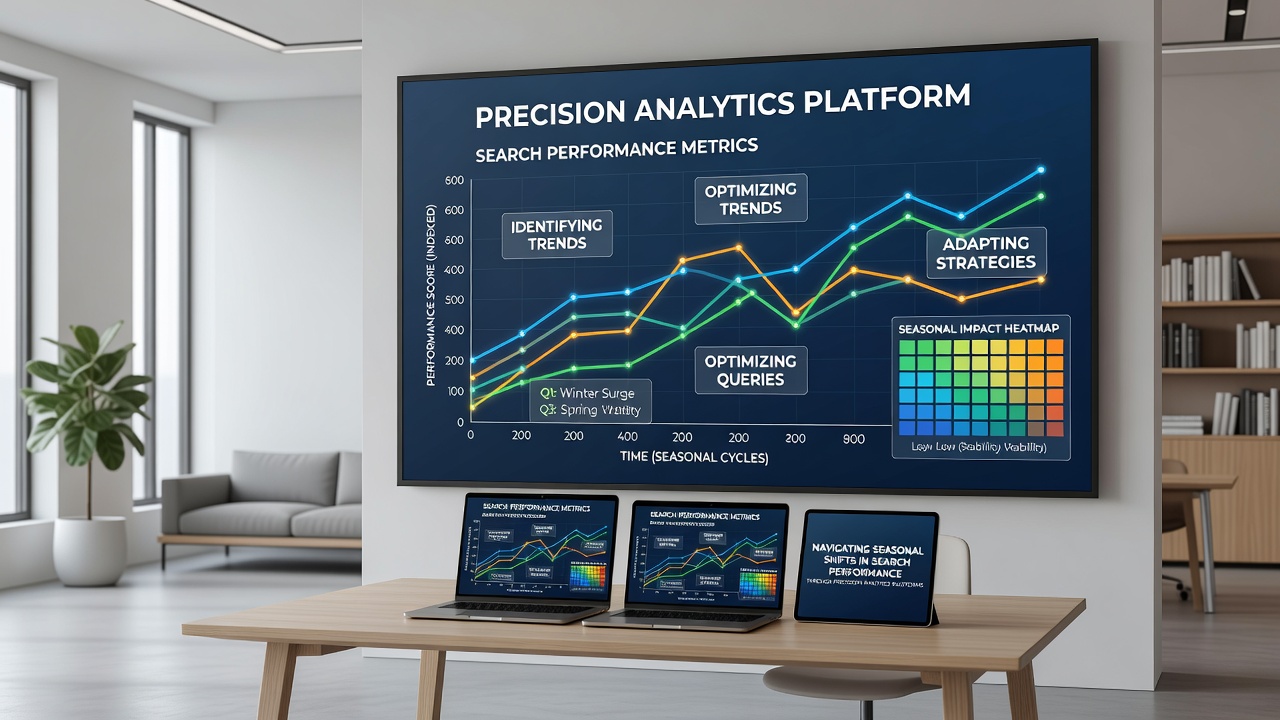
Seasonal fluctuations in search performance affect visibility across industries each year, and precision analytics platforms provide the data layers needed to track those patterns at scale. Platforms aggregate click-through rates, impression volumes, and ranking positions while layering in time-based filters that isolate holiday peaks, back-to-school surges, or post-summer lulls. Observers note that these tools turn raw search console exports into segmented reports where performance deltas become visible within days rather than weeks.
Understanding Seasonal Patterns in Search Data
Search engines record measurable lifts in query volume around recurring events, and precision platforms capture those lifts through daily granularity rather than monthly averages. Retail queries for winter apparel rise sharply in late October while travel-related searches spike in March and April; analysts compare year-over-year datasets to separate genuine seasonal movement from algorithmic noise. Data shows that sites maintaining consistent content freshness during these windows retain position stability even when competitor pages drop in frequency.
Platform Capabilities for Time-Sensitive Adjustments
Modern analytics suites include cohort analysis modules that group keywords by historical seasonality scores, allowing teams to forecast expected traffic ranges before the shift begins. These modules integrate crawl-budget signals with impression-share metrics so that pages optimized for September demand receive priority indexing in August. Researchers at institutions studying digital commerce have documented how automated alerts flag when a keyword cluster deviates more than two standard deviations from its three-year baseline, prompting immediate content or technical reviews.
Case Examples from Retail and Travel Sectors
One retail chain adjusted product schema markup in early August 2025 after its analytics platform projected a 34 percent increase in back-to-school queries; the adjustment correlated with maintained top-three rankings through the entire quarter. Travel operators similarly used precision filters to isolate shoulder-season keywords in February 2026, reallocating internal links toward pages that historically underperformed during off-peak months. These adjustments occurred before the seasonal trough fully materialized, demonstrating how platforms convert historical patterns into actionable preemptive steps.

September 2026 Considerations
September 2026 brings an additional layer because several major search engines plan to roll out updated core systems that emphasize real-time user signals. Precision platforms already ingest beta data from sandbox environments, so teams monitoring September traffic can compare pre-update and post-update performance within the same dashboard. Figures reveal that sites using these comparative views identified a temporary ranking compression in lifestyle categories that lasted approximately eleven days before recovery metrics stabilized.
Integration with Broader Measurement Frameworks
Analytics platforms connect seasonal search data to downstream conversion events through multi-touch attribution models, revealing whether increased impressions during peak periods translate into revenue or simply higher bounce rates. Those who have studied these integrations report stronger correlation coefficients when mobile session duration is included alongside desktop rankings. The ball remains in the court of each organization to decide how aggressively to reallocate resources based on those combined signals.
Conclusion
Precision analytics platforms continue to refine their handling of seasonal search shifts by combining granular historical datasets with forward-looking alert systems. Organizations that embed these tools into weekly review cycles maintain clearer visibility into performance movement regardless of calendar-driven demand changes. As search engines evolve their ranking criteria, the same platforms supply the comparative baselines needed to isolate algorithmic effects from predictable seasonal variation.